Drill bits and cutting discs: the right one for each material
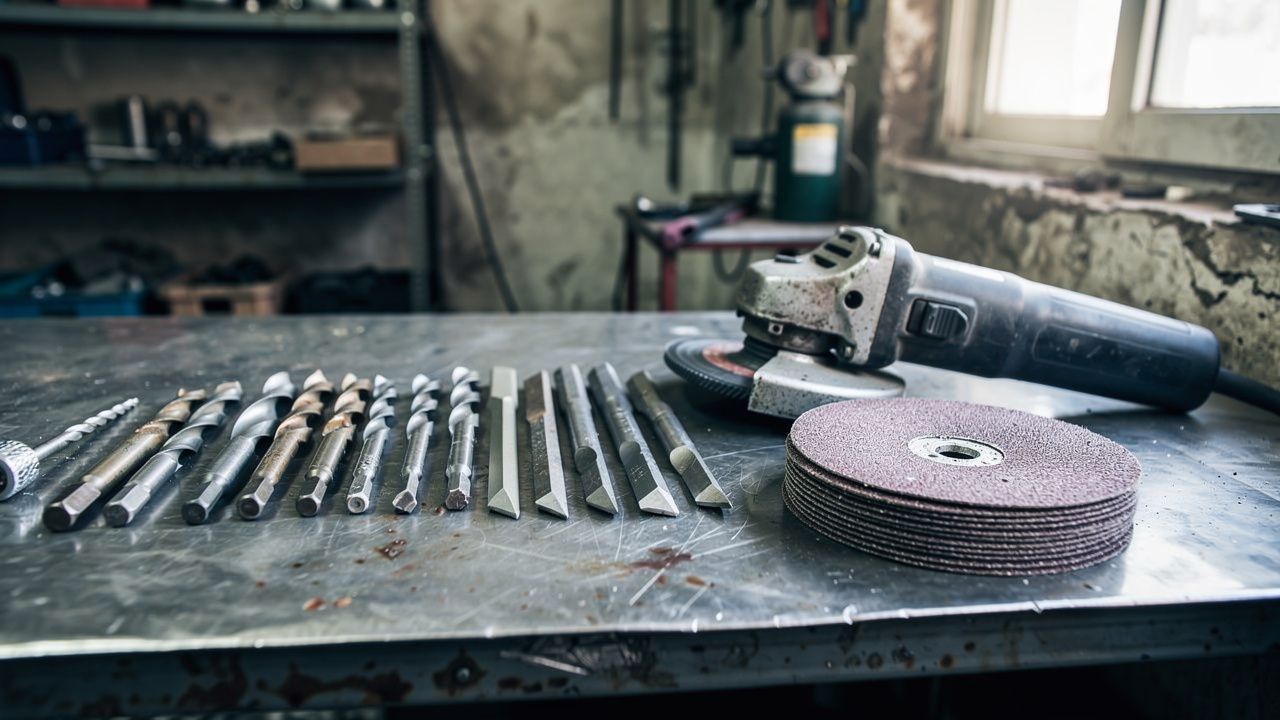
A wrong bit is slow at best, and at worst it burns, snaps or ruins the hole. A wrong disc can break apart at full speed. Here is the short version.
Drill bits
- Steel: HSS (high speed steel) bits. Ground ones last longer than the cheap rolled ones.
- Stainless steel: HSS-Co (with cobalt, often 5%). Drill slowly, press firmly, and use cutting oil.
- Brick and light concrete: masonry bits with a carbide tip, in a hammer drill.
- Hard concrete: SDS-plus bits in a rotary hammer. They do not fit an ordinary chuck.
- Wood: wood bits with a centre point, so the bit does not wander.
Cutting and grinding discs
- Size: the disc must match your grinder: 115, 125, 180 or 230 mm, with the right centre hole (usually 22.23 mm).
- Speed: the maximum speed printed on the disc must be higher than your grinder’s speed. Never the other way round.
- Thickness: thin discs (1 mm) cut steel fast and clean; thicker ones are for rough work. Never grind with the side of a cutting disc.
- Stainless steel: use discs marked INOX, so you do not leave rust spots on the steel.
- Date: resin discs have an expiry date printed on the metal ring. Old discs can break.
Keep the guard on the grinder. It is there for the day a disc breaks.