Air cylinders: how to pick the bore and the stroke
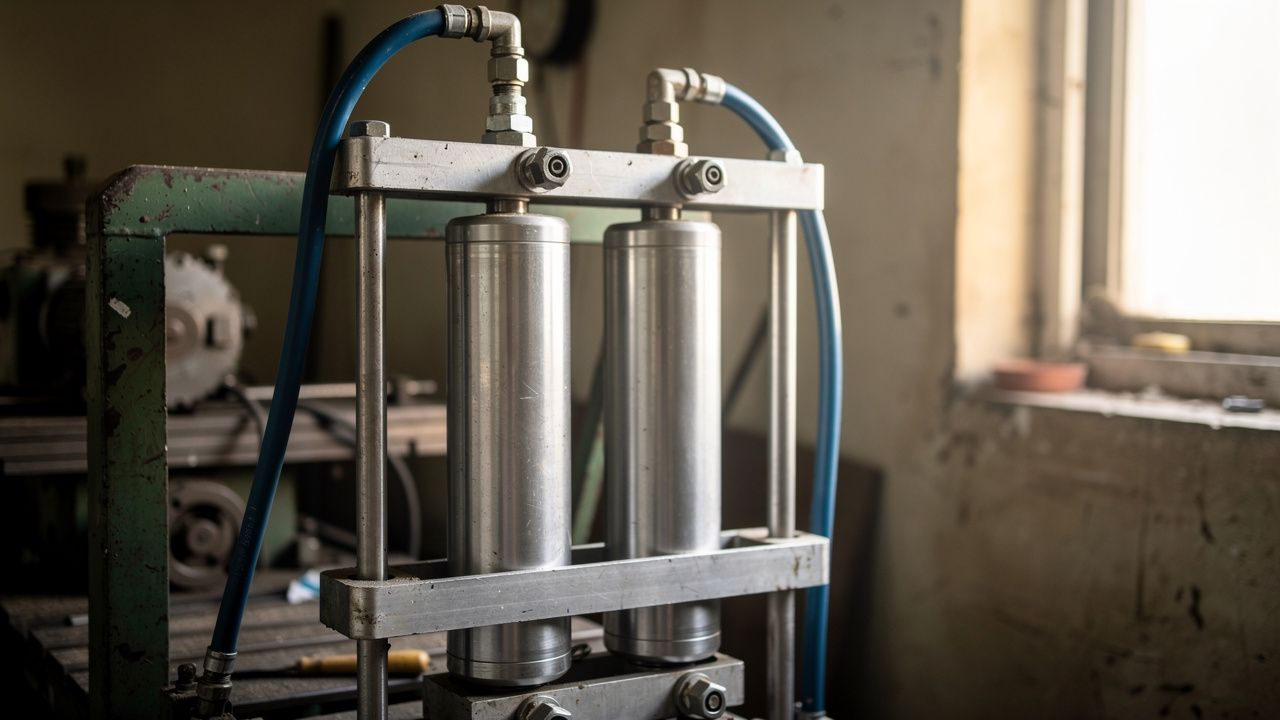
An air cylinder (pneumatic jack) pushes and pulls with compressed air. Two numbers name it: the bore (the inside diameter, which decides the force) and the stroke (how far it moves).
Working out the force
Force = air pressure × piston area. One bar presses with 10 newtons on each square centimetre. So a 50 mm bore (19.6 cm²) at 6 bar pushes with about 1,180 N, roughly 120 kg.
Two things make the real force smaller:
- Pulling back is weaker, because the rod takes up part of the area.
- Friction and pressure drop when it moves. Choose a cylinder with 1.5 to 2 times the force you need.
Common bores: 32, 40, 50, 63, 80 and 100 mm. The ISO 15552 standard means cylinders of the same bore from different makers have the same mounting holes.
The stroke
Measure how far the part must move and add a few millimetres. Long, thin cylinders can bend under side load: ask for a guided cylinder if the load is not pushed straight.
Worth asking for
- Magnetic piston: so a small sensor on the outside can tell the machine the cylinder has arrived.
- Adjustable cushioning: slows the last few millimetres, so the cylinder does not bang at the end.
- Single or double acting: single acting (air one way, a spring back) suits small, short jobs; double acting (air both ways) is the usual choice.