Choosing a water pump: flow and head, not horsepower
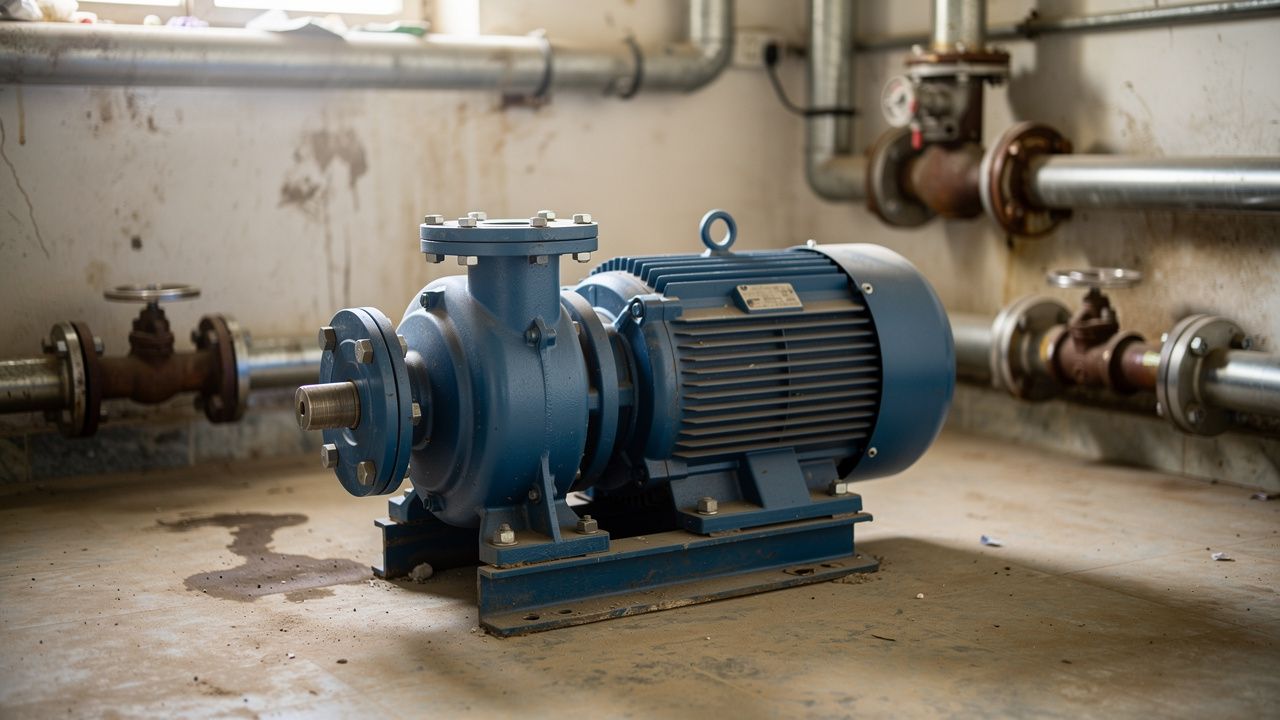
People often ask for “a 1 horsepower pump”. But two pumps with the same power can do very different jobs. A pump is chosen by two numbers.
1. Flow
How much water you need, in litres per minute or cubic metres per hour (m³/h). For a building, count the taps and devices that run at the same time; for a machine, it is on its data sheet.
2. Head
How high the pump has to lift the water, in metres:
- The height from the water level to the highest outlet,
- plus the losses in pipes, elbows and valves (long or thin pipes lose a lot),
- plus the pressure you want at the tap: every 1 bar is about 10 metres.
Example: a roof 15 m above the tank, about 5 m of pipe losses and 2 bar at the top: about 40 m of head.
Read the curve
Every pump has a curve: flow on one side, head on the other. Your two numbers should land near the middle of it, not at either end. That is where the pump works best and lasts longest.
The suction limit
A surface pump can lift water from below itself only about 6–7 metres in practice. For a deeper well, you need a submersible pump that goes down into the water.
Also tell the seller
Single-phase or three-phase power, the water temperature, and if the water is clean, dirty or chemical. And never let a pump run dry: a cheap float switch can save it.