How to choose a temperature controller
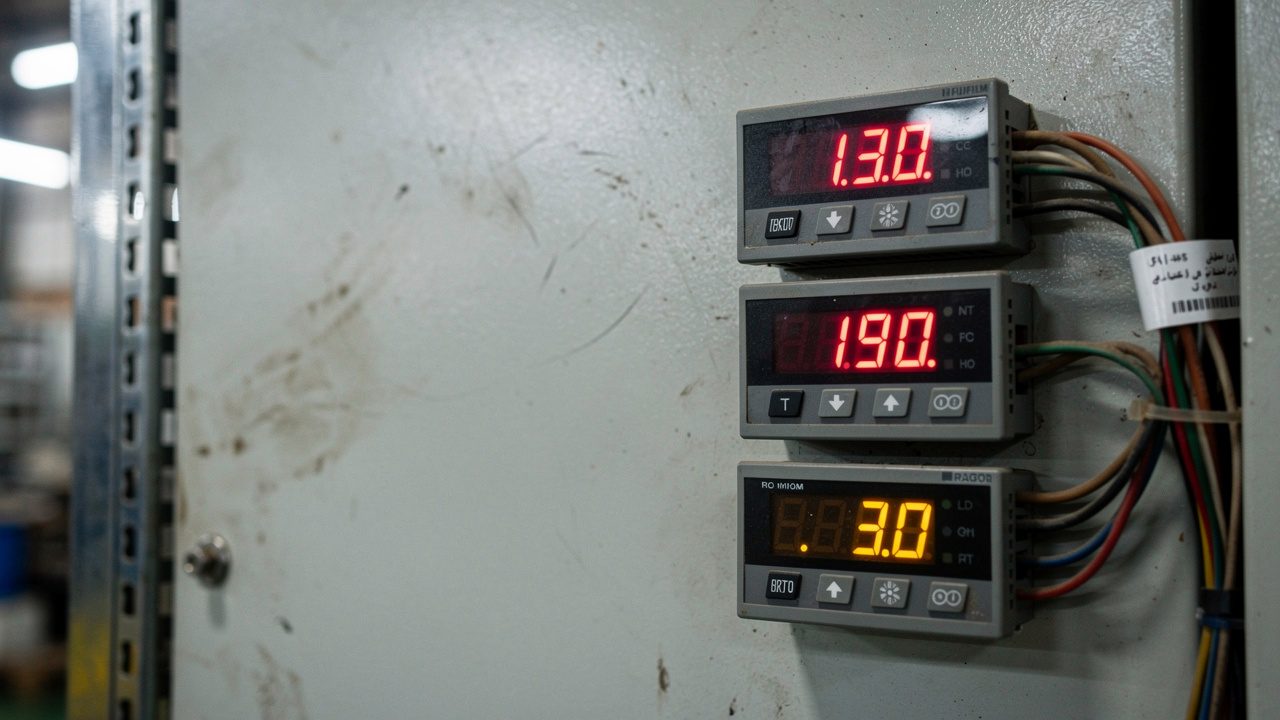
A temperature controller reads a sensor and switches a heater (or a cooler) to hold a set temperature. Before you call a seller, answer these five questions. They will ask you the same ones.
1. What sensor do you have?
Most controllers read a thermocouple (type K or J) or a PT100. Many models take both (“universal input”), but cheap ones often take only one. Check the sensor’s label or the old controller’s settings.
2. What does the output switch?
- Relay: for a contactor or a small load that switches a few times a minute.
- SSR (voltage pulse): drives a solid-state relay. Best for heaters that switch often, because nothing wears out.
- 4–20 mA: for a power controller or a control valve.
3. On/off or PID?
On/off is fine when a few degrees up and down do not matter. For a steady temperature (plastics, food, ovens), choose PID with auto-tune: the controller learns your machine and stops overshooting.
4. What size is the hole in the panel?
Controllers come in standard panel sizes: 48×48, 48×96, 72×72 and 96×96 mm. Measure the cut-out before you buy, so the new one drops into the old hole.
5. What power and alarms do you need?
Most run on 100–240 V AC; some need 24 V. If you need a warning lamp or a cut-off when it gets too hot, ask for an alarm output.
Last tip: ask the seller if the unit is original and what warranty they give. Prices change with the dollar, so ask for the price on the day you buy.