Solenoid valves: 3/2, 5/2 or 5/3?
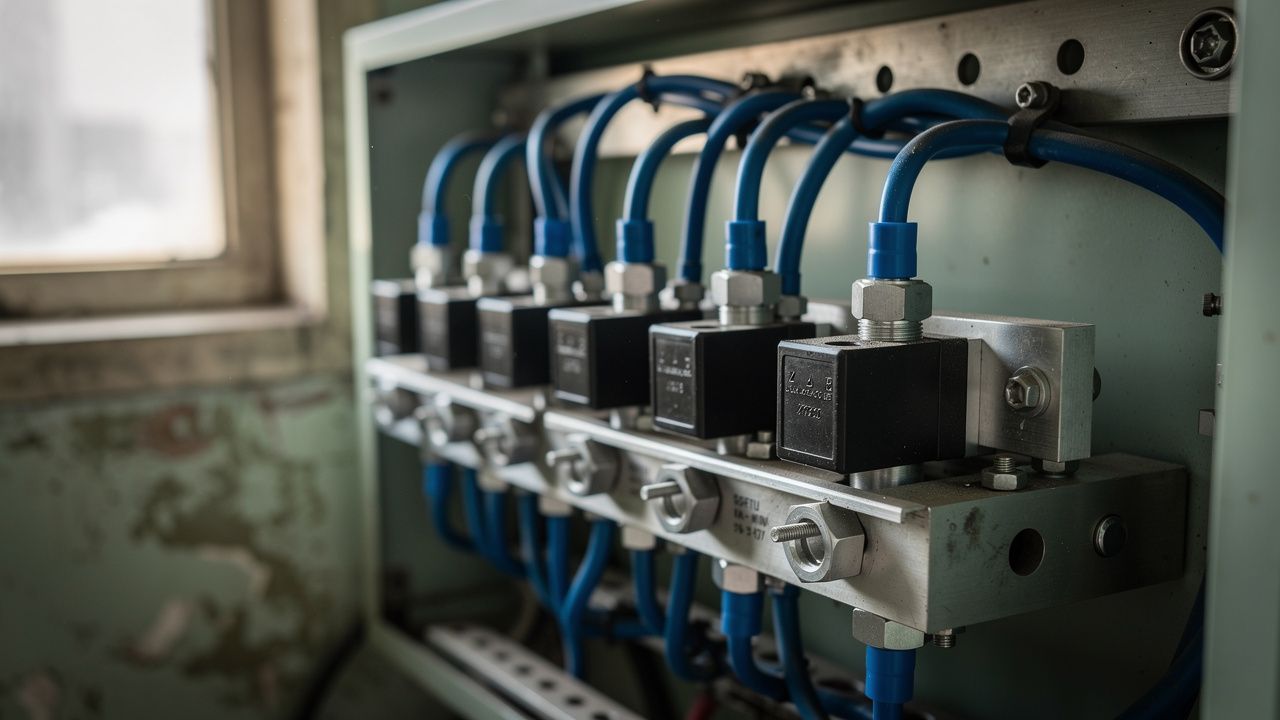
A solenoid valve is an electric switch for air: power on the coil, and the air goes a different way. The numbers on it tell you what it can do.
Reading the numbers
The first number is the ports (holes), the second is the positions.
- 3/2: for a single acting cylinder (air out, spring back), or to switch an air supply on and off.
- 5/2: for a double acting cylinder: air pushes it out, then pushes it back. The most common.
- 5/3: like 5/2 with a middle position, so the cylinder can stop halfway, or hold still when the power fails.
One coil or two
A single solenoid valve has a spring: when the power goes off, it goes back to its rest position. A double solenoid valve stays where it was until the other coil gets power. It “remembers”. Choose on purpose: think about what the machine should do if the power fails.
Coil voltage and size
24 V DC is the usual choice with a PLC; 220 V AC in older panels. Port size (1/8, 1/4 inch…) follows the cylinder’s size. A manual button on the valve is useful for testing.
Water and gas valves are different
Many solenoid valves for water are “pilot operated”: they need a minimum pressure difference (often about 0.3–0.5 bar) to open. On a tank with low pressure, ask for a direct acting valve. Also say if it should be closed or open without power (NC or NO).