Calipers: vernier, dial or digital?
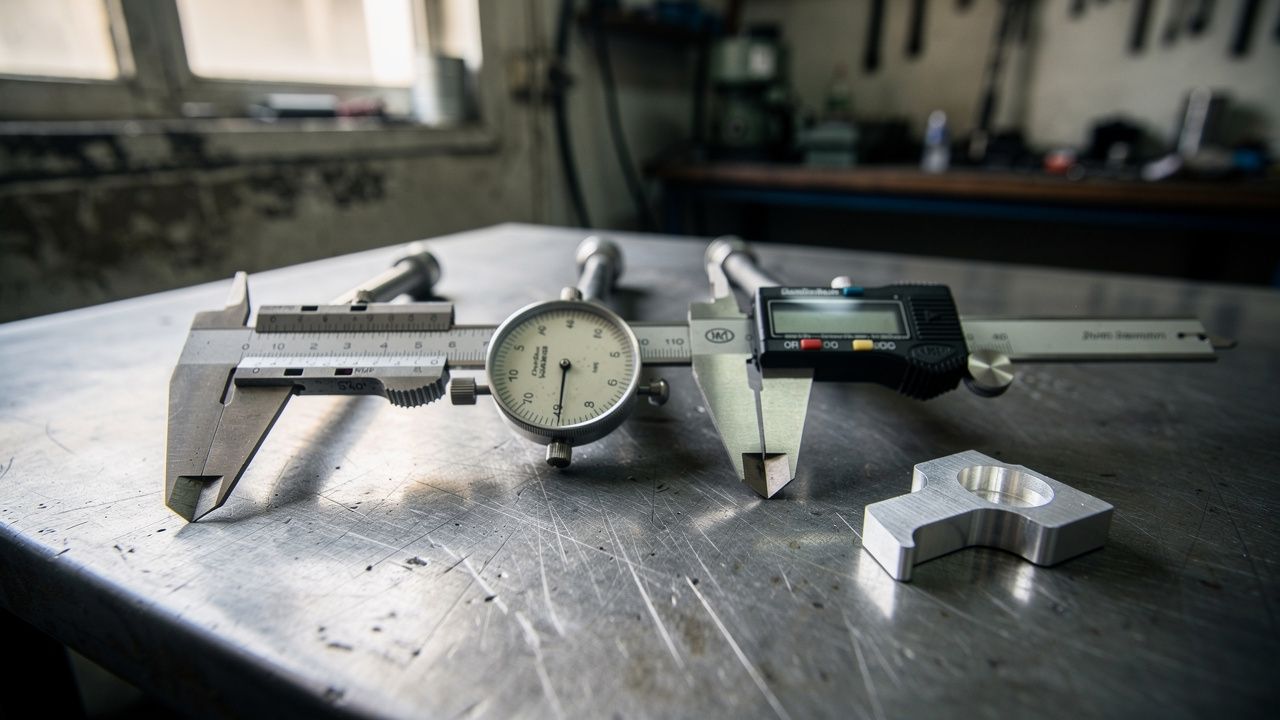
All three measure the same things: outside, inside and depth. The difference is how you read the number, and how much care each one needs.
Vernier caliper
No battery and almost nothing to break. You read a small second scale, so it takes good eyes and a little practice. Usual steps are 0.05 or 0.02 mm. A good choice for a workshop where tools get dropped.
Dial caliper
A needle on a round dial, easy to read at a glance, usually in 0.02 or 0.01 mm steps. Inside is a small gear on a toothed rack: dust, chips and a hard drop can damage it.
Digital caliper
The easiest to read: 0.01 mm on a screen, a mm/inch button, and you can set zero anywhere to compare two parts. It needs a battery. Near coolant or oil, ask for an IP67 model (sealed against water).
When a caliper is not enough
A good caliper is accurate to about ±0.02–0.03 mm. If your drawing asks for tighter limits, for example a bearing seat, use a micrometer.
What to tell the seller
- Length: 150 mm is the usual size; 200 or 300 mm for bigger parts.
- Type and step (from above).
- Original or not: fakes of well-known brands are common. Close the jaws and hold them up to a light: you should see no light between them, and the reading should be exactly zero.